
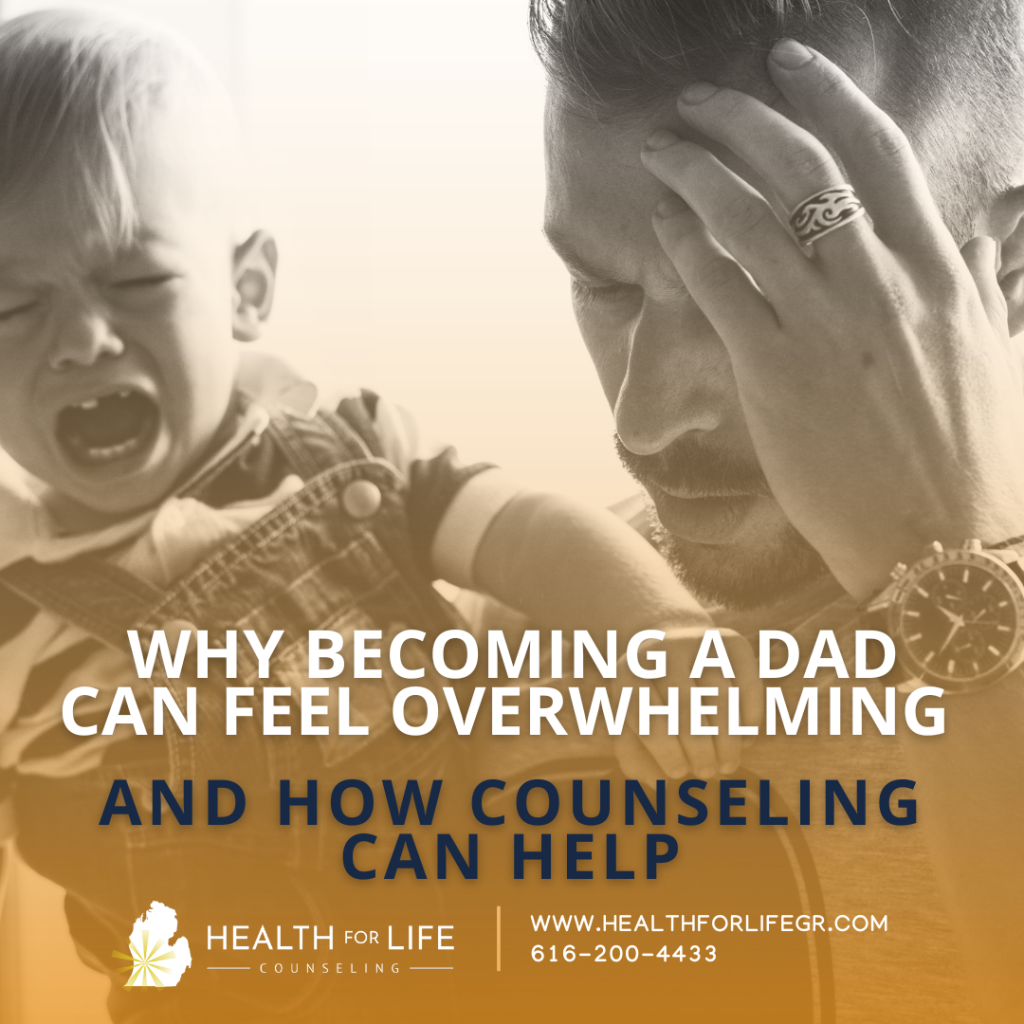
After a baby is born, most of the attention naturally goes to the mother. And that makes sense because mothers go through pregnancy, birth, physical recovery, hormonal changes, and feeding pressure.
But that does not mean fathers are unaffected.
New fathers also have to adjust to a completely different life where they constantly feel pressure to provide, support their partner, bond with the baby, stay calm, and somehow know what to do. At the same time, many fathers feel like they are not supposed to talk about their own fear, exhaustion, sadness, or uncertainty because it’s “nothing compared to what the mother is going through.” And that’s what many new dads believe about themselves. But comparing struggles does not resolve them.
When fathers’ emotional needs are ignored, it can affect their mental health and ability to feel connected to the baby and to their partner.
In this article, we’ll discuss why new fatherhood can feel so difficult, what emotional struggles new dads often experience, and how counseling can help.
Why new fatherhood can feel difficult
No one expects becoming a father to be easy. If you made that decision and prepared for a baby, chances are that you already knew your level of responsibility, as well as other people’s expectations of you, would increase. But knowing that doesn’t mean it’s easy, and it doesn’t mean you will automatically know how to handle fatherhood.
Suddenly, you are not only thinking about yourself or your relationship, but you feel responsible for the baby’s safety, your partner’s well-being, the family’s finances, and the future you are now expected to help build.
The tricky part, though, is that becoming a father means that your identity is about to change because it’s a major life transition. And these kinds of transitions often require people to adjust the way they see themselves, how they spend their time, and which roles matter most to them. This means that becoming a father brings changes in self-concept, social roles, relationships, and everyday routines all at once (Saxbe et al., 2018).
For new fathers, this adjustment often requires plenty of time and effort. Research shows that paternal identity often develops gradually as men spend time caring for their babies, learn new skills, and become more confident in their role (Noh et al., 2021). Even if you are happy to be a father, you may still miss parts of your previous life, feel unsure about who you are now, or worry that you are not doing enough.
These emotions can exist alongside love for your baby. After all, you, as a father, are learning as you go. And these difficult or confusing emotions do not mean that you regret becoming a father or that you are failing in your new role. You’re just learning how to care for a baby while building a new identity.
What does research say about fathers’ mental health after birth?
Taking a look at recent research is enough to understand that fathers’ emotional struggles after birth are neither rare nor something they should simply push through.
While every father responds differently to this transition, a large meta-analysis shows that 8.75% of fathers experience depression during the first year after their baby is born (Rao et al., 2020). Anxiety is also common during this period. In fact, anxiety symptoms are more common among fathers during pregnancy and the postpartum period than they are typically among men in the general population (Leiferman et al., 2021). Similarly, depression is usually harder to recognize among fathers because it often appears as irritability, emotional distance, loss of interest, or spending more time at work to escape pressure at home. Studies show that previous mental health difficulties, limited social support, relationship dissatisfaction, financial pressure, and the mother experiencing depression can increase the risk of postpartum depression in new fathers (Álvarez-García et al., 2024).
Of course, being exhausted or overwhelmed doesn’t mean that you necessarily have a mental health condition. Adjusting to fatherhood is difficult on its own. But if you have not felt like yourself for a while, you deserve to take that change seriously rather than telling yourself that other people have it worse.
Common emotional struggles new fathers experience
There is no single correct way to feel after becoming a father. But one thing is for sure – new dads can experience many emotions at once. You may feel proud, protective, happy, anxious, exhausted, and overwhelmed in the same week. Sometimes, these emotions are also difficult to name because they appear as frustration, distance, or a sense that you should be doing more.
Here are some common emotional struggles new fathers may experience:
- Feeling like you have to be strong all the time – You may feel responsible for supporting your partner and managing practical problems while you yourself are tired or struggling. This can make it hard to admit when you need support. Research shows that new fathers often try to control or hide difficult emotions so they can remain strong (Solberg et al., 2023).
- Feeling left out or unsure where you fit – The mother may naturally receive more attention from healthcare professionals, relatives, and even the baby, especially when she is breastfeeding. You may want to be involved but feel uncertain about how to help.
- Difficulty bonding with the baby – Some fathers feel outside the mother-baby bond in the beginning. You may want to connect with your baby, but feel unsure how to comfort, feed, or soothe them. Bonding often develops gradually as you care for the baby and learn to recognize their needs.
- Guilt and self-doubt – It’s common among new dads to feel guilty for missing their old lives, needing time alone, or struggling to enjoy fatherhood. When you compare yourself to an idealized image of a good father, these experiences can make you feel like you’re failing as a dad.
- Relationship disconnection – Even though having a baby is a positive life change, it can negatively affect your relationship. The reason is that once a baby is born, there’s less time to talk with your partner, less intimacy, more tension, and more disagreements about responsibilities. Studies show that first-time fathers often experience changes in their relationships (Baldwin et al., 2018). When these changes become difficult to handle, couples counseling may help partners communicate more openly.
How counseling can help new fathers
If you are a new father and you feel overwhelmed, anxious, disconnected, or unsure where you fit, it may be a sign you’re going through one of the biggest transitions of your life without enough space to talk about it honestly. Counseling can give you somewhere to talk honestly without minimizing your experience or comparing it to what your partner is going through.
During sessions, your therapist can help you put difficult emotions into words and understand what may be underneath your irritability, withdrawal, or constant worry. You might explore the expectations you have towards yourself, learn ways to regulate intense emotions, and work through fears that you are failing as a father. Counseling may also help you find realistic ways to bond with your baby and balance fatherhood with the other parts of your identity.
Studies show that interventions involving counseling, psychoeducation, and support for couples can reduce fathers’ depression and anxiety symptoms (e.g., Rodrigues et al., 2022). Although research is still developing, it’s clear that fathers feel better when their emotional needs are recognized and supported. And that’s something professional counseling can provide.
Counseling opportunities for new fathers in Michigan
At Health for Life Counseling, our licensed therapists work with fathers who are adjusting to new responsibilities, identity changes, relationship pressure, and the emotional demands of caring for a baby. Depending on what you are experiencing, you may benefit from counseling for the journey of parenthood, counseling designed for men, or individual therapy.
Sometimes becoming parents also changes the way partners communicate, divide responsibilities, or make time for their relationship. In these situations, couples counseling can help you discuss these changes together and understand what each person needs without turning every conversation into an argument.
You can meet with a therapist in person in Grand Rapids, Ada, or the Northview Neighborhood, or choose online counseling from anywhere in Michigan. We accept many insurance plans, which may make getting support more accessible.

