
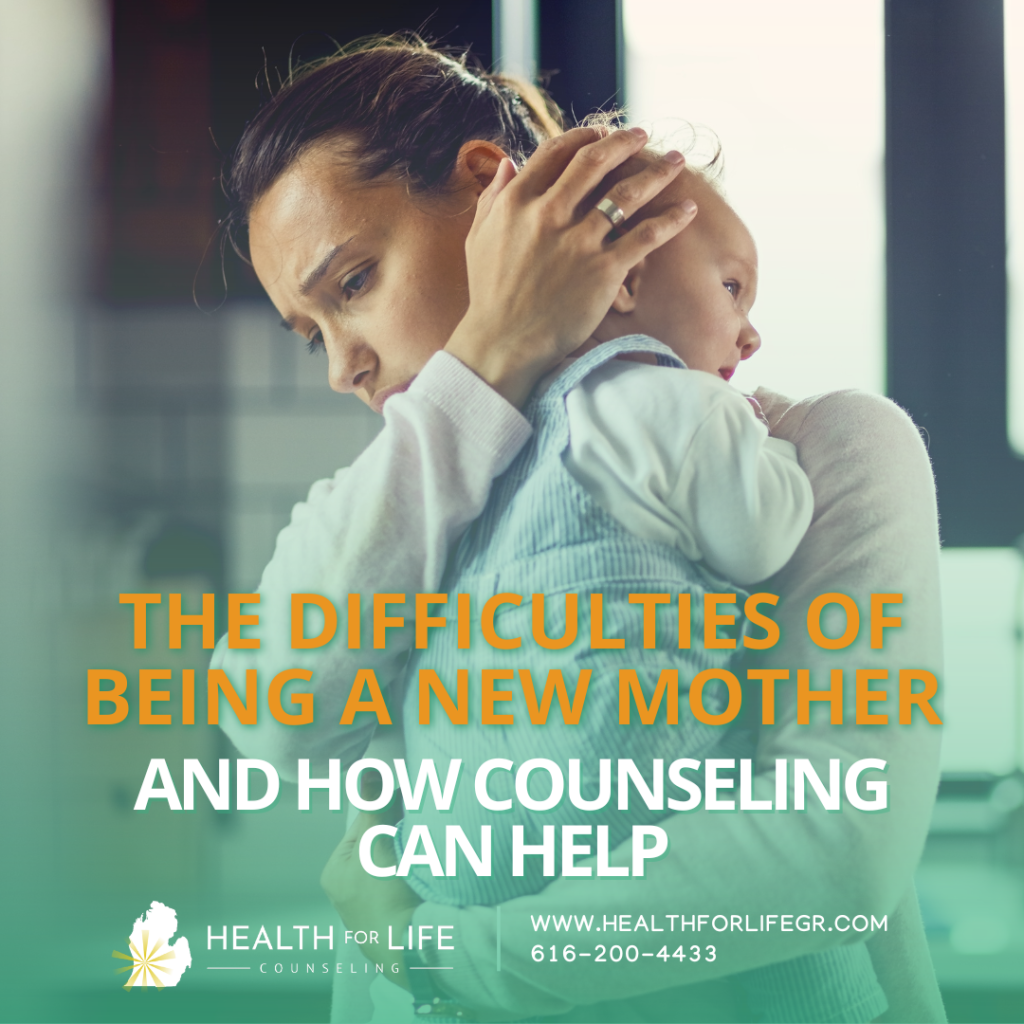
As a new mom, you probably often hear that this should be one of the happiest times in your life. And sometimes, it is. But even if your life with a newborn is full of moments of love and tenderness, that doesn’t mean it’s easy to adjust to everything motherhood brings.
You may love your new role but still feel exhausted, lonely, anxious, or unlike yourself. You may adore your baby and still miss your old routine. You may feel proud of yourself and still feel unsure or overwhelmed.
The aim of this article is to show you that struggling in new motherhood doesn’t mean you are a bad mother. And you don’t need to go through all the physical, emotional, and identity transitions alone while caring for a baby who needs you constantly.
Let’s discuss why being a new mom can feel so difficult, what emotional struggles are common, and how counseling can help you feel more supported during this new chapter.
Why new motherhood can feel so difficult
It’s hard to find a new mom who only experiences the beautiful parts of motherhood. No one doubts that you deeply love your new baby and feel moments of joy, but at the same time, no one should expect you to feel calm, confident, and emotionally stable all the time.
First of all, your body needs a significant amount of time to heal from pregnancy or birth. As a result, you may feel physically sore, tired, sensitive, or disconnected from your body. Because of the new routine and the fact that your baby depends on you almost constantly, it’s natural that your sleep is often broken. Poor sleep, in turn, may lead to symptoms of depression and anxiety during pregnancy and postpartum (Okun et al., 2018)
Besides, it’s not easy to accept the fact that your days now mostly consist of feeding, changing, soothing, and trying to understand what your baby needs instead of taking care of what you yourself require to heal and feel better.
Consequently, some new moms feel guilty for struggling because they believe motherhood should come naturally. However, becoming a mother is not just a role you step into once the baby arrives. It is a physical, emotional, relational, and psychological transition, and that’s why it makes sense if you need time, support, and compassion while you adjust.
How does your identity change when you become a mother
One of the hardest parts of becoming a mother is that your sense of self can change before you even have time to understand what is happening.
Many women experience significant changes in routines, work goals, social life, relationships, priorities, and independence after having a baby. Even small parts of daily life, such as showering, eating, or answering messages, can start to feel different. You may not have the same time for yourself, the same freedom to make plans, or the same energy for the things that used to make you feel like you.
Because of all this, your needs may suddenly feel secondary after the baby arrives. This, in turn, affects the existing identity and can sometimes lead to a sense of disconnection from yourself. For instance, in studies, new mothers describe a feeling of losing or rebuilding parts of their identity as they adjust to the new role (Arnold-Baker, 2019). Yes, you’re still “you,” but it may be harder to explain that the new routine no longer gives you the same space to rest, think, connect with others, or do the things that once made you feel grounded.
What does research say about maternal distress?
These struggles are not just based on a few personal stories. In fact, research has shown that many new mothers experience emotional distress as they adjust to motherhood.
In particular, Copeland and Harbaugh (2019) describe maternal distress as something that can affect several parts of a new mother’s life, including stress, adaptation, functioning, and connection. This means that a new mom may struggle not only with feeling anxious or sad, but also with adjusting to the new role, managing daily responsibilities, and feeling connected to herself, her baby, or other people.
Other studies show that postpartum emotional struggles are common. Specifically, a large global review found that postpartum depression affects about 17% of women worldwide (Wang et al., 2021), while anxiety symptoms affect about 15% of women in the first weeks and months after birth (Dennis et al., 2017).
Of course, this doesn’t mean every new mother has postpartum depression or anxiety. But if you experience emotional distress after birth, it needs to be taken seriously because “baby blues” in new mothers is more common than many people realize. The American College of Obstetricians and Gynecologists notes that baby blues can include sadness, crying, and emotional ups and downs after childbirth, usually improving within a few days or one to two weeks. Still, even when these feelings are common, you shouldn’t handle everything alone.
Common emotional struggles new mothers experience
New motherhood can bring many emotions at once. You may feel love, joy, fear, sadness, irritation, gratitude, and exhaustion all in the same day. And, of course, this is confusing. But the problem isn’t having so many emotions at the same time. The only problem is the feeling that you are not allowed to talk about them.
Here are some common emotional struggles new mothers may experience:
- Feeling like you are not doing enough – Taking care of a newborn can feel like an endless process. Even when you are feeding, soothing, changing, holding, planning, and worrying all day, you may still feel like you should be doing more. This can lead to stress, frustration, and the belief that you are not being a “good enough” mother, which is far from the truth.
- Anxiety and constant worry – It’s natural for new moms to worry about their baby’s health, sleep, safety, development, or whether they are making the right decisions. But if worry becomes constant, exhausting, or hard to control, it may be a sign that you need more support.
- Feeding stress and guilt – Breastfeeding is one of the most common sources of pressure for new mothers. Some moms struggle with pain, milk supply, latching, pumping, schedules, or the fear that they are not feeding their baby “the right way.” Studies show that many moms feel judged for using formula or combination feeding, while breastfeeding mothers also experience guilt, often connected to pressure from peers and family (Jackson et al., 2021). However, the way you feed your baby doesn’t measure your worth as a mom, and it’s completely your own choice to figure out what works for you and your baby.
- Forgetfulness and mental fog – Many new mothers also feel more forgetful or scattered than before. This could be related to the fact that most of the time, their sleep is deprived, their hormones are still adjusting, and their routine is full of new tasks that are hard to manage at once. So, while this may feel frightening, try to remind yourself that it’s a usual part of the overwhelm of motherhood.
- Relationship stress – Don’t be surprised if a new baby changes the dynamics of your relationship. No matter how much you and your partner love each other, having a newborn often means that you have less time to talk, less sleep, more responsibilities, and more chances to feel misunderstood. Research shows that many couples experience declines in relationship satisfaction after becoming parents, especially around the transition to the first child (Doss et al., 2009). Still, this doesn’t mean your relationship is failing. You just need to be open to learning new roles that this major life change may bring.
How counseling can help new mothers
New mothers are often surrounded by advice, expectations, and questions about the baby, but not always by people who truly ask how they are doing emotionally. That’s why sometimes counseling becomes the first place where a new mom can finally say the things she has been holding in.
In therapy, you don’t have to pretend that everything feels beautiful or easy. You can talk honestly about the ups and downs you’re experiencing on a daily basis and share your emotions in a safe space. A professional therapist can help you understand what you are feeling, reduce self-blame, process difficult birth experiences, and adjust to the identity changes that come with becoming a mother.
Different therapy approaches may be helpful depending on what you are experiencing. For instance, mothers who feel stuck in anxious or self-critical thoughts might benefit from Cognitive Behavioral Therapy, and research suggests that CBT-based interventions can be effective for perinatal depression (Pettman et al., 2023).
If your main problem is relationship stress, role changes, or feeling unsupported, Interpersonal Therapy may also be helpful. This approach focuses on relationships, communication, grief, and major life transitions, and research shows that IPT can help reduce perinatal depression symptoms and support effective interpersonal functioning (Sockol, 2018).
If birth itself felt frightening, painful, or traumatic, EMDR therapy may be another option to discuss with your therapist because, in studies, early trauma-focused EMDR therapy after traumatic birth effectively reduced postpartum PTSD symptoms (Hendrix et al., 2025).
Regardless of the specific approach, your therapist will help you feel less alone with what you are carrying and provide support with tough emotions.
Counseling opportunities for new mothers in Michigan
If you’re a new mother and you notice that exhaustion, feelings of loneliness, or overwhelm have become too much to carry on your own, maybe it’s time to stop waiting until things get “bad enough” and reach out for help.
At Health for Life Counseling, our licensed therapists support new moms through postpartum anxiety, depression, birth trauma, identity changes, relationship stress, and, in general, the emotional adjustment of becoming a parent. We’ll provide a safe, non-judgmental space where you can talk honestly about what motherhood has been like for you, without needing to pretend that you are fine or grateful all the time.
Our professional counselors will work with you to understand what feels most difficult right now and choose an approach that fits your needs. This may include ACT to support identity changes and reconnect with your values, EMDR therapy if birth trauma or earlier trauma is affecting you, DBT skills for emotional regulation, or mind-body strategies to help you feel calmer and more grounded.
If you’re in Grand Rapids, Ada, or the Northview Neighborhood, or anywhere in Michigan through online counseling, we can help you feel less alone as you adjust to this new chapter of motherhood. Remember that we accept a wide range of insurance plans, such as Cofinity, Meritain Health, UMR, Aetna, Optum, and more.

